Your fence is looking rough. Gray, dark-streaked, maybe a little rough to the touch. And you’re starting to wonder if it’s time to tear it out and start over.
Stop right there.
Before you call a fencing contractor and hand over $10,000–$20,000, there’s something you should know: that worn-out fence is probably not dead. It just needs the right restoration — and the difference in cost is significant.
The Real Cost of Replacing a Wood Fence in Utah
A new wood fence in the Salt Lake City area can run anywhere from $5,000 to $20,000 depending on the linear footage, material, and labor. That’s a serious chunk of your home improvement budget.
Here’s the part most homeowners don’t realize: a gray, weathered fence often has 10–20 years of life left in it. The color change isn’t structural failure — it’s surface damage from UV exposure and oxidation. The wood underneath is still sound.
A professionally restored and sealed fence can last 45+ years. An ignored one might make it a decade. Restoration isn’t just a cleaning service — it’s a way to protect the investment you’ve already made.
Why Does Your Fence Turn Gray and Black?
To understand why restoration works, you have to understand what’s actually happening to your fence. Two main culprits are at work on Utah properties:
Iron Tannates
Wood naturally contains compounds called tannins. When rain, snowmelt, or sprinkler water hits your fence, those tannins react with the iron from your fence’s nails and screws. The result is iron tannate — a chemical compound responsible for the black, gray, and bluish discoloration you see working its way through the wood grain. It’s not dirt you can scrub off. It’s a chemical stain embedded in the fibers.
UV Oxidation
Utah’s sun is relentless. Extended UV exposure breaks down lignin — the natural compound that holds wood fibers together — through a process called photolysis. UV light splits lignin molecules into free radicals, which react with oxygen and change the wood’s chemical structure at a cellular level. The result is that dull, silvery-gray color that makes a fence look like it’s given up. Again — not surface grime. A chemical transformation.
Add in the dirt and grime buildup that comes with Utah’s dusty climate, and you’ve got a fence that looks completely spent. The good news is that all of it is reversible.
Our 2-Step Professional Fence Restoration Process
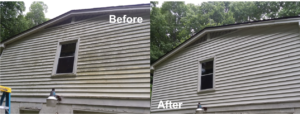
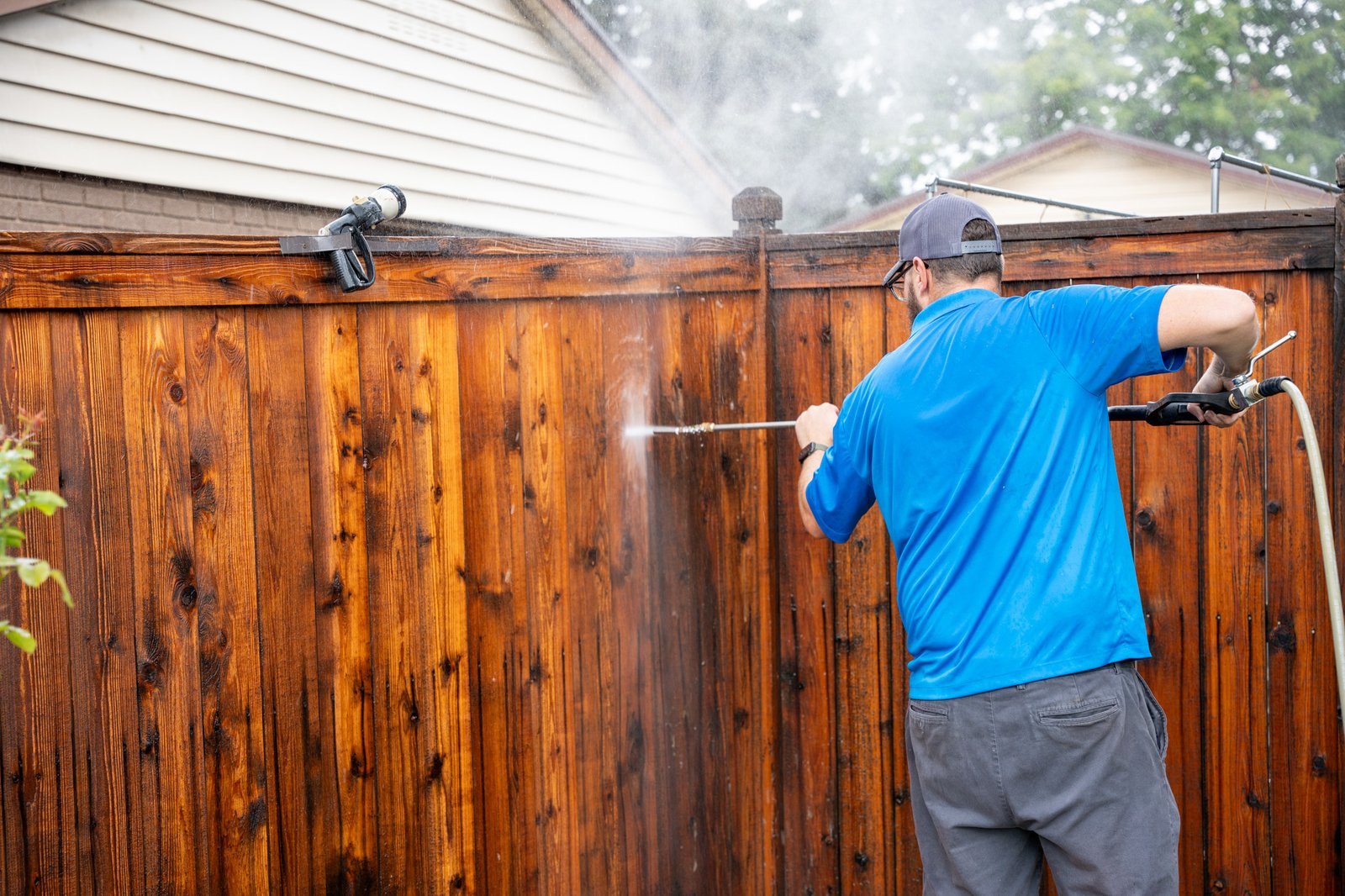
We don’t pressure wash wood at high PSI. That approach causes splintering, surface damage, and raises the wood grain permanently. Instead, we use a targeted two-step chemical restoration process designed specifically for wood.
Step 1: Sodium Metasilicate — The Deep Cleaner
This high-alkalinity agent goes to work on the surface buildup that UV and oxidation have left behind. Through a process called saponification, it converts oils, greases, and embedded grime into a water-soluble substance that rinses cleanly away. It breaks down years of buildup without attacking the wood itself.
Step 2: Oxalic Acid — The Brightener
After the cleaning step, wood often looks darker before it looks better. Oxalic acid is what brings it back. It neutralizes the iron tannate compounds that have stained the wood fibers, lifting that black and gray discoloration out of the grain. It also acts as a natural brightener, restoring the honey-gold tone of fresh wood that’s been hiding under years of oxidation.
The two steps work together — clean first, restore second. The result is wood that looks like it was just milled.
Why Spring Is the Best Time for Fence Restoration in Salt Lake City
If you’ve been putting this off, spring is the time to move on it.
Dwell time matters. The cleaning agents we apply need time to penetrate and work. In cooler spring temperatures, they can dwell longer without drying out — which means a deeper, more thorough clean. Come July, the heat accelerates evaporation and shortens that window.
Access is easier. Before your vines, roses, and ornamental shrubs hit full growth, we have clear access to every inch of your fence. Trying to restore a fence in August means working around mature plantings, which slows the job and increases the chance of contact with foliage you don’t want treated.
Summer-ready. Get it done now and your fence is sealed and protected before BBQ season, outdoor gatherings, and the peak UV months of the year. Restored and sealed in April beats scrambling to fix it in June.
Protecting Your Fence After Restoration
Restoration brings your fence back. Sealing keeps it there.
After the two-step process, we strongly recommend applying a high-quality semi-transparent sealer. It creates a barrier against Utah’s hard water mineral deposits, spring rain, and the UV exposure that starts the oxidation cycle all over again. Stain, seal, or paint — the goal is the same: keep moisture out and wood protected so you’re not back here in three years.
A restored and sealed fence doesn’t just look better. It lasts decades longer.
See It for Yourself
Want to see the before and after? Watch the full restoration process here:
Ready to Restore Your Fence?
Don’t spend $15,000 on a replacement when restoration can give you the same result for a fraction of the cost. If your fence is gray, stained, or weathered, there’s a good chance it has years of life left in it — it just needs the right process.
Know your measurments? Get your free instant quote from LHS Powerwash today, or Contact us today. 801-810-4644